
Where the Hundred Paths Lead: Brunei
Some places and people stay with you after visiting. We’d been to Brunei, as a visit to learn of EML international school. The school is a space that was perfect for early years learning via play. Inspired by the Reggio Emilia Approach, the children were exploring freely outdoors in the school compound. It was heartening to see. Cristina, the founder of EML school, brought Aminah and I to venture out to the outdoor trails and we had a sneak peek into Brunei’s wild. And the rest, captured our hearts and attention. “We’d be back,” we said. “We’d like to share it with our Forest Families.” Our hearts said.
Day 1
We touched down not quite knowing what to expect. Despite knowing fully the itinerary of the days ahead, we wondered if our Forest Families would appreciate what Brunei had to offer. Cristina was there to greet us at arrivals, warm and unhurried. We naturally gathered in a welcoming circle, as if it was a Forest School session (only this time, we were standing in an international airport). Warm smiles and introductions were shared in the circle. The Forest School experience had started. The ethos remained the same, and this time, small family units led the way. A bus waited for our arrival and we were whisked off to our first experience - a boat ride into Kampung Ayer, literally translated as ‘water village.’ We secretly loved the literal street names we soon came to know. What we didn't know yet, was that this boat ride would become the highlight of our entire first day.
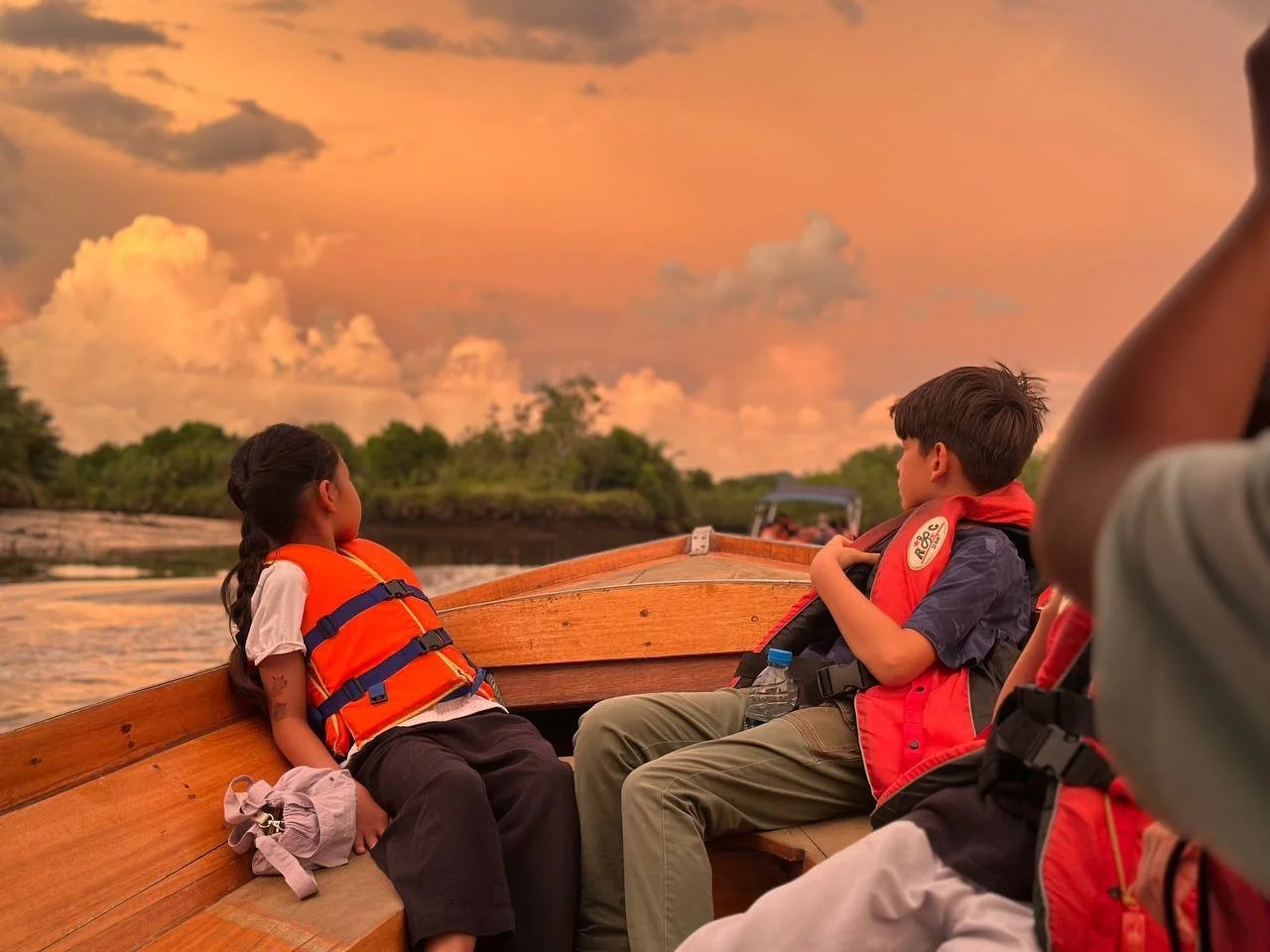
With life jackets strapped on, we wound through Kampung Ayer, the world's largest floating village, and watched Brunei reveal itself. For two hours, our views were of stilt houses, an endless water body and wildlife. We spotted children crossing wooden bridges on their way home from school, a group flying kites by the bridge and signs of hidden life in the water village. We peeked into what life by the river was like. We floated by the royal graves where their entrances are marked by domes of gold, quietly signalling that we were somewhere sacred. With wind in our faces, and, an open sky, the ride felt exhilarating and peaceful.
Further in, the village gave way to mangroves. There was a sudden quiet as our skilled boat driver slowed down. The water was noticeably a shade of green, and it started giving up its secrets. We were in three different boats. Each were present to stop to notice storks near the edge of the water banks and crocodiles lurking just beneath the surface. They were as still as the water itself until they disappeared. The children in our speed boats squinted to see brightly coloured birds that perched on branches. Proboscis monkeys watched us watching them. Wildlife seemed to be everywhere we looked. The boats continued on, speeding ahead into the horizon and revealed the sun setting.
Looking back, it was such a grounding space to be in, right after we had landed. It was a way for everyone to decompress after the flight and to let the land (and water) welcome us. In each of our respective boats, these children and parents have not met each other before. They all attend Forest School(FS) but were from different sessions. In our FS ways, we trusted that they will bond when they were ready. The families settled into their own quiet ways and there was no need to talk or feign friendliness. A common thread that held all of us was to connect with nature first. It helped that the steady sound of the speedboat’s engine was strangely comforting. It drowned out everything else, allowing everyone to just be.
The sky turned a peaceful deep orange, its glow signalling us to head back. As the darkness took over, distant lightning flickered in the distance. Nature’s scenes washed our senses as our boats sped in the dark. We arrived the jetty just as the night arrived. We ended the day with a hearty family meal, with pizza.
With nature’s sights still buzzing in our senses, our forest families wondered what path the next day would take.
Day 2
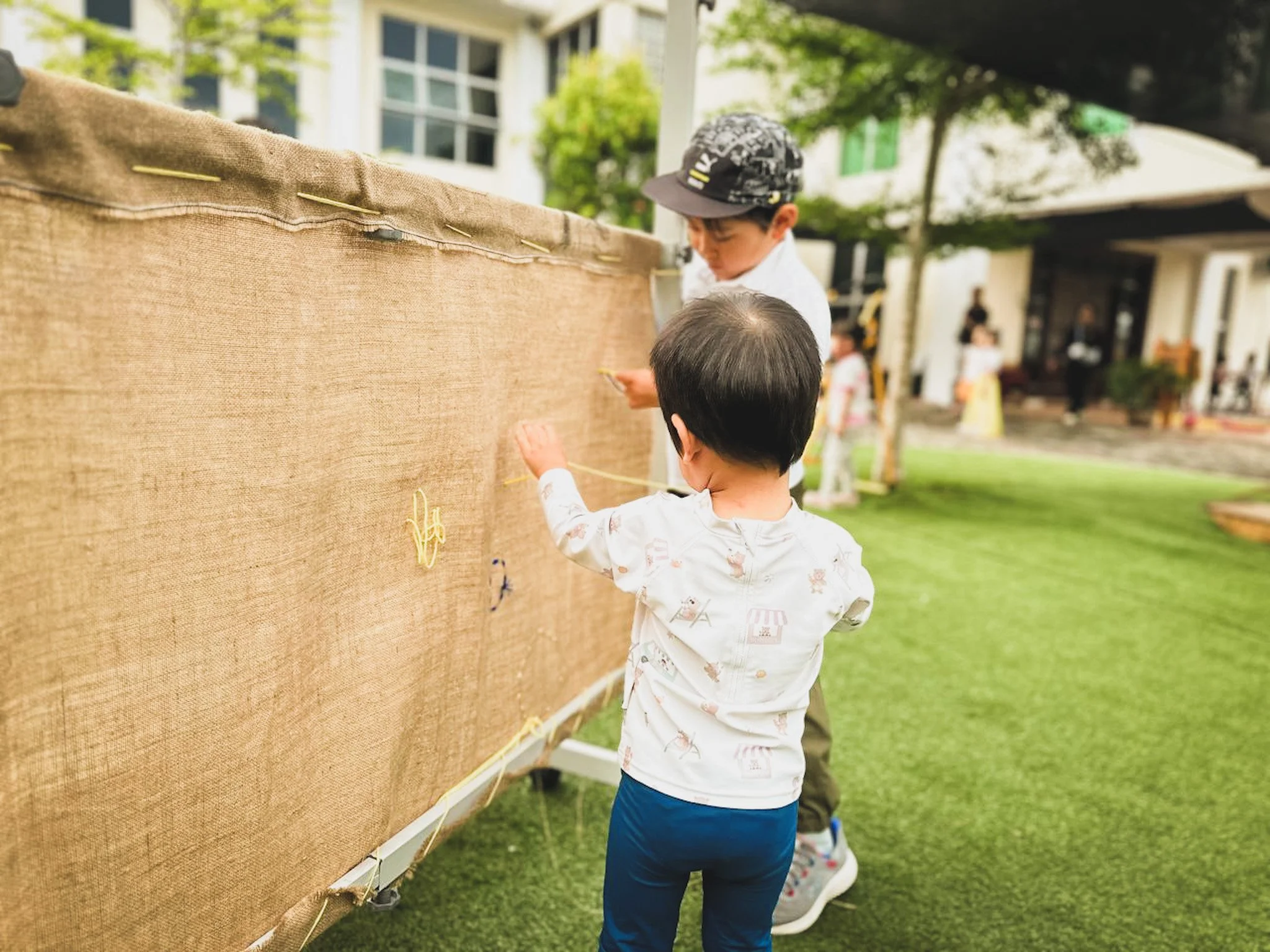
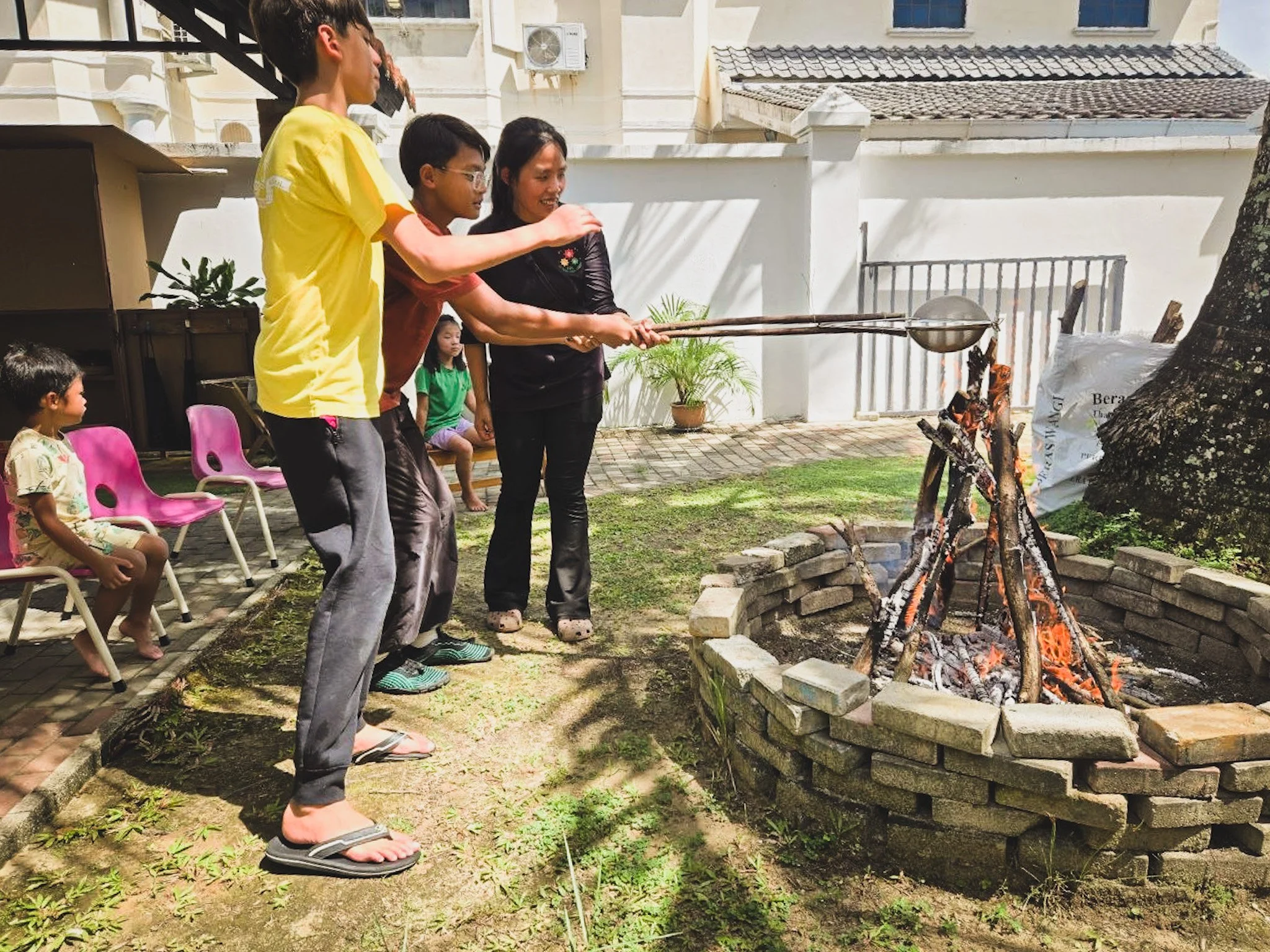
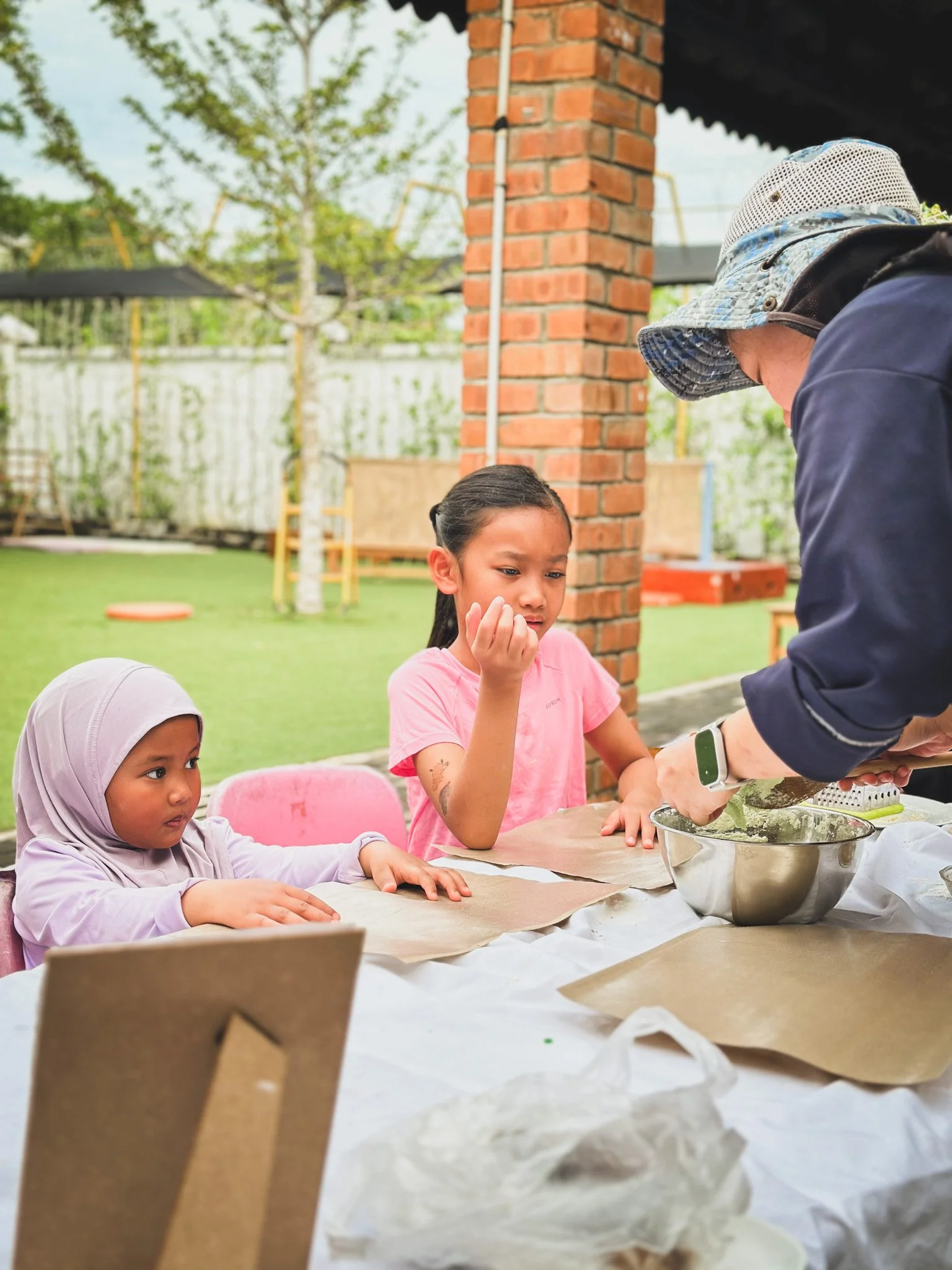
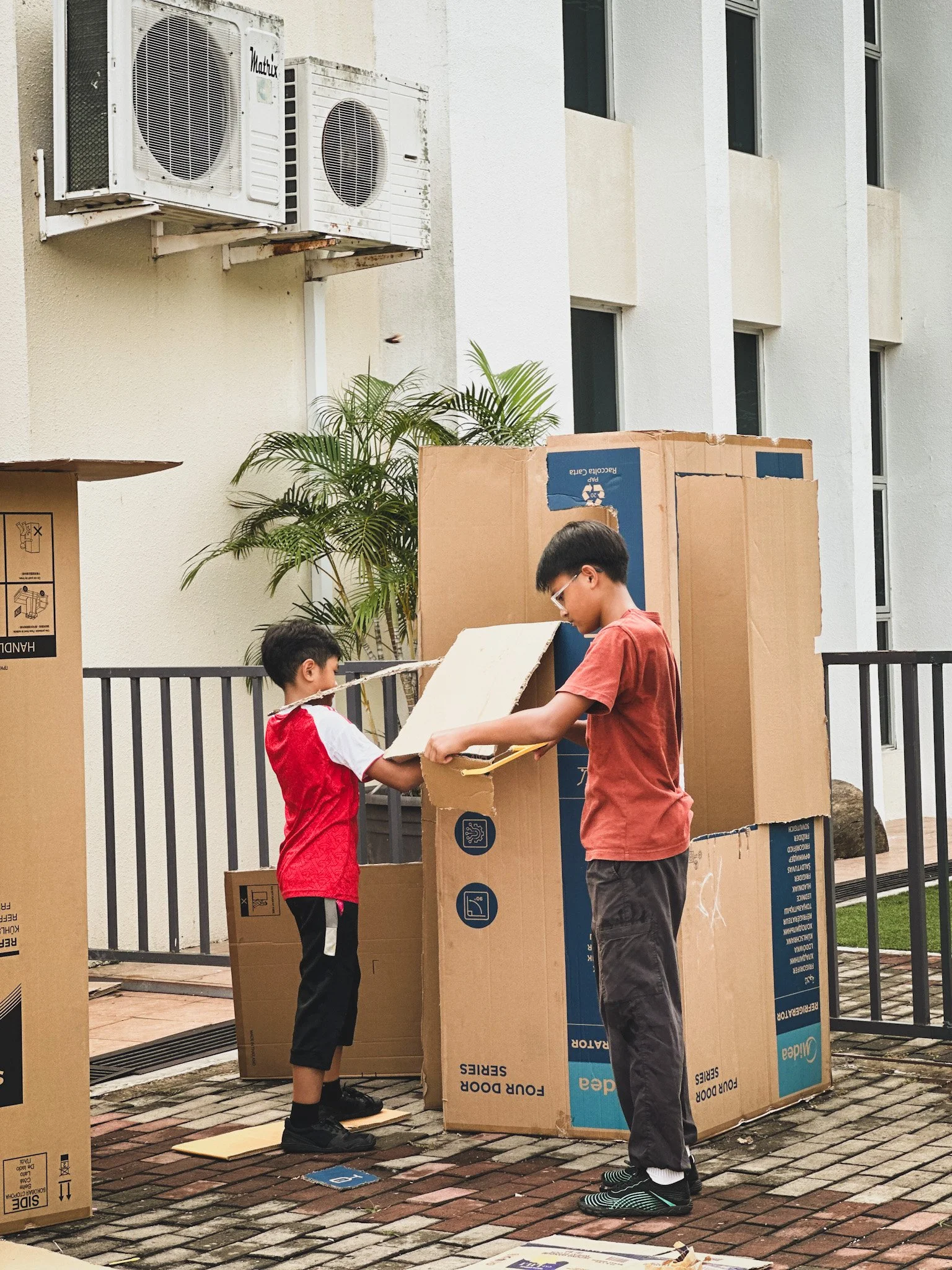
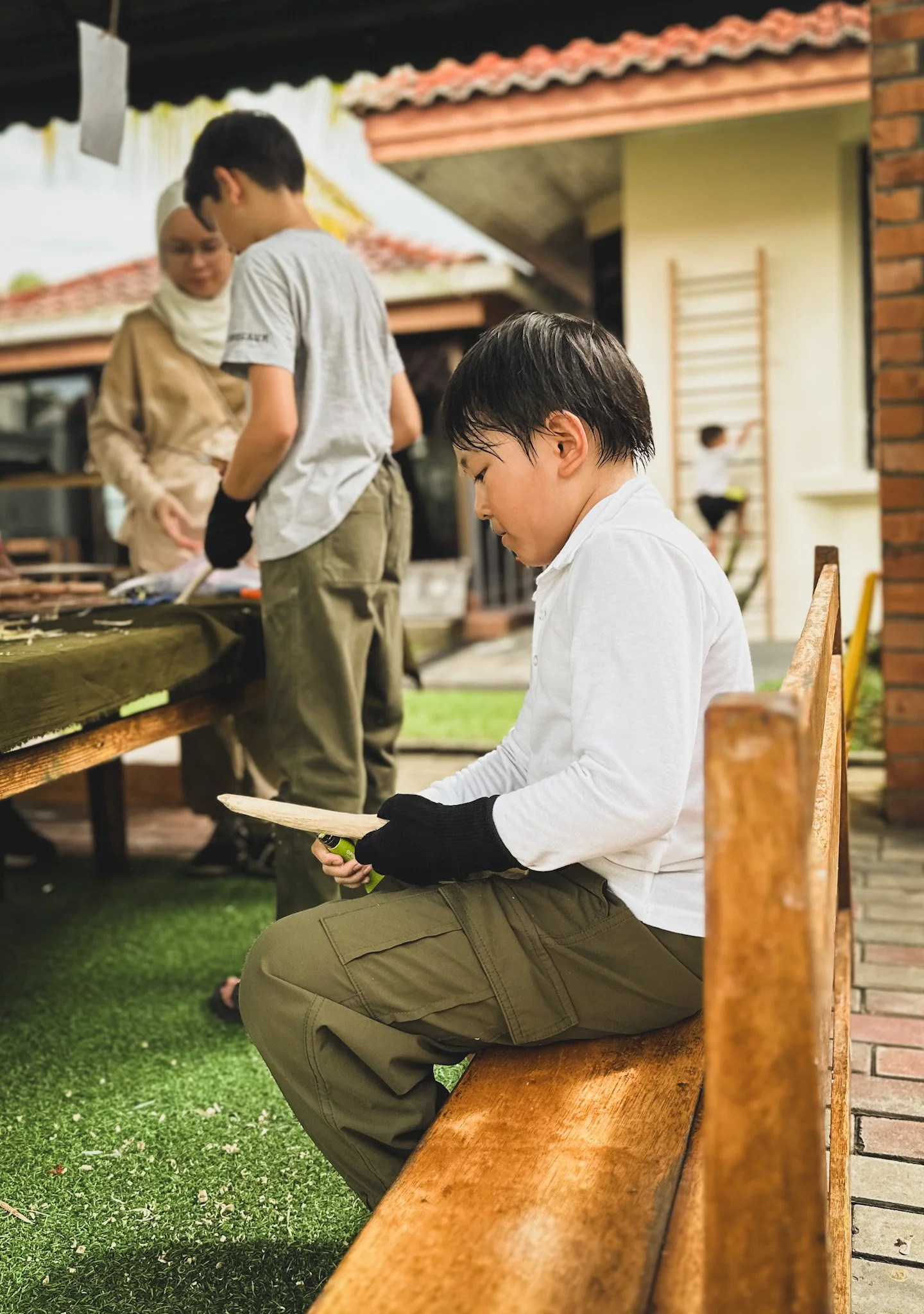
The first half of the day was an exploration at EML international. Children were scattered throughout the compound exploring different invitations that called out to them. Some were by the water exploration area, transporting water through funnels and bamboo, some were threading yard through a large burlap, some gravitated towards clay, some whittled and some built houses with cardboard. The possibilities were endless. The children were immersed. We all were treated to a homely local lunch in the school compound before heading back to the hotel to rest.
After a quick rest, it was a quick ride to Muara beach. Lots of Bruneians were jogging on the side, a national past time it seems. We had a quick walk to the end the beach and it was set on a beautiful untouched piece of land. The sand was soft and many natural materials to interact with. Again, our senses were filled with sea breeze, the sound of the waves and salty seawater. The children made a dash for the toys Cristina helped to bring along from school.
Crab hunting was the best as some children searched for the tiny ones and collected them in their buckets. Laughter filled the large space and soon the sun turned a golden hue. The seaside was bathed in the sun’s golden glory. We headed back as the skies turned dark, and then enjoyed dinner in the nearby cafe.
It was a fulfilling day, and the families seamlessly started to connect. True to how we run things, there were no icebreaker games and no forced introductions. We trusted, as we always do as some things can't be rushed into being. Bonds unfold in their own time and in their own way.
Day 3
After a hearty breakfast, we packed our bags and checked out of the hotel for an early morning bus ride for a forest hike at Dadap hills. Everyone was well-equipped. Chatter filled the bus as we journey to the forest. It was an unknown terrain and as coaches, we wondered if the families would be okay with the hike. Once again, we trusted and kept the faith.
Everyone got off the bus and paused at the foot of a hill that overlooked a flight of natural looking steps up to a short summit. We could only imagine the trail ahead.
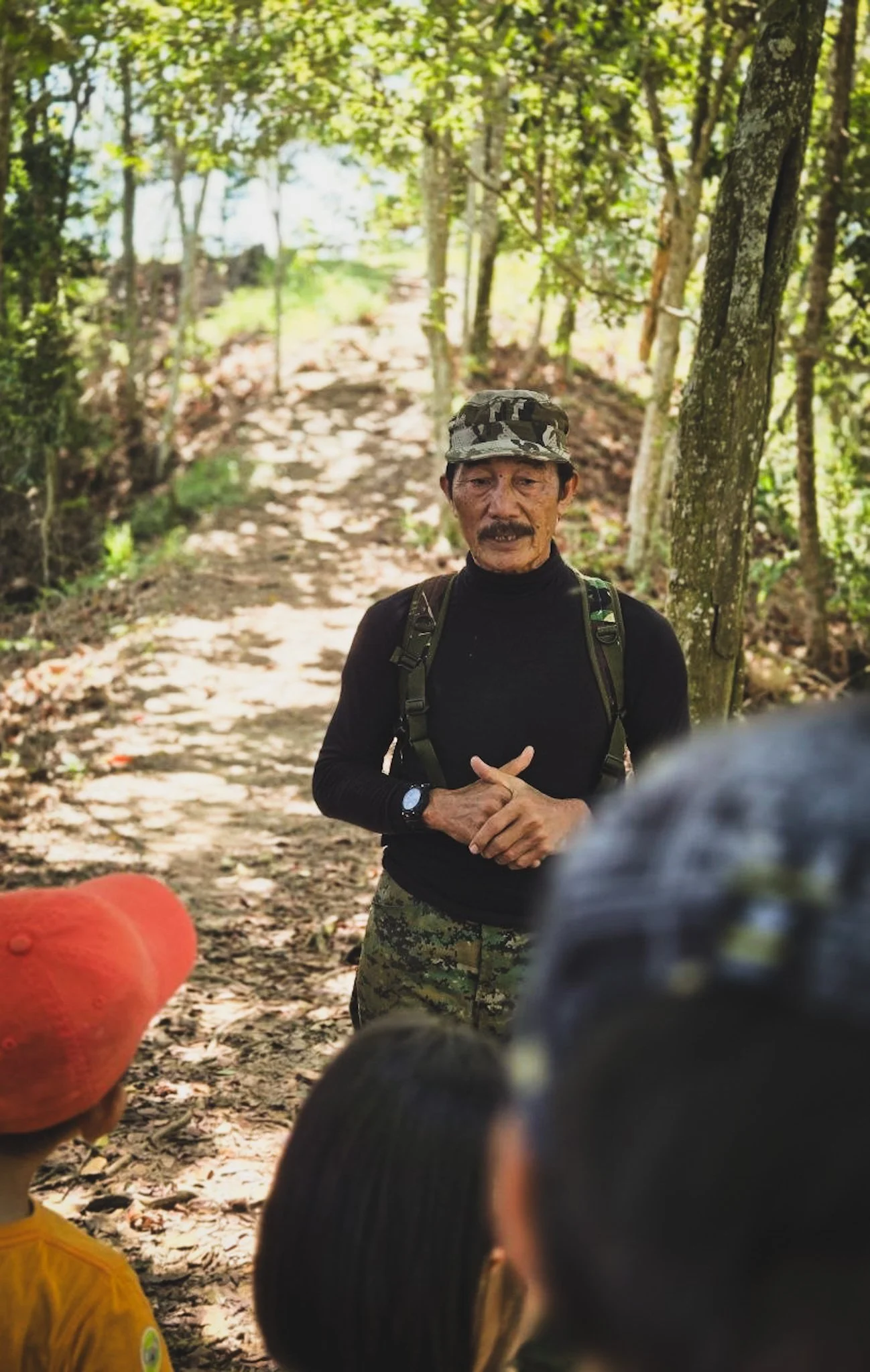
At the top of the steps, we met Andy, our forest guide, geared up and clearly well prepared. He ran through a few safety rules, and before long, we were on our way.
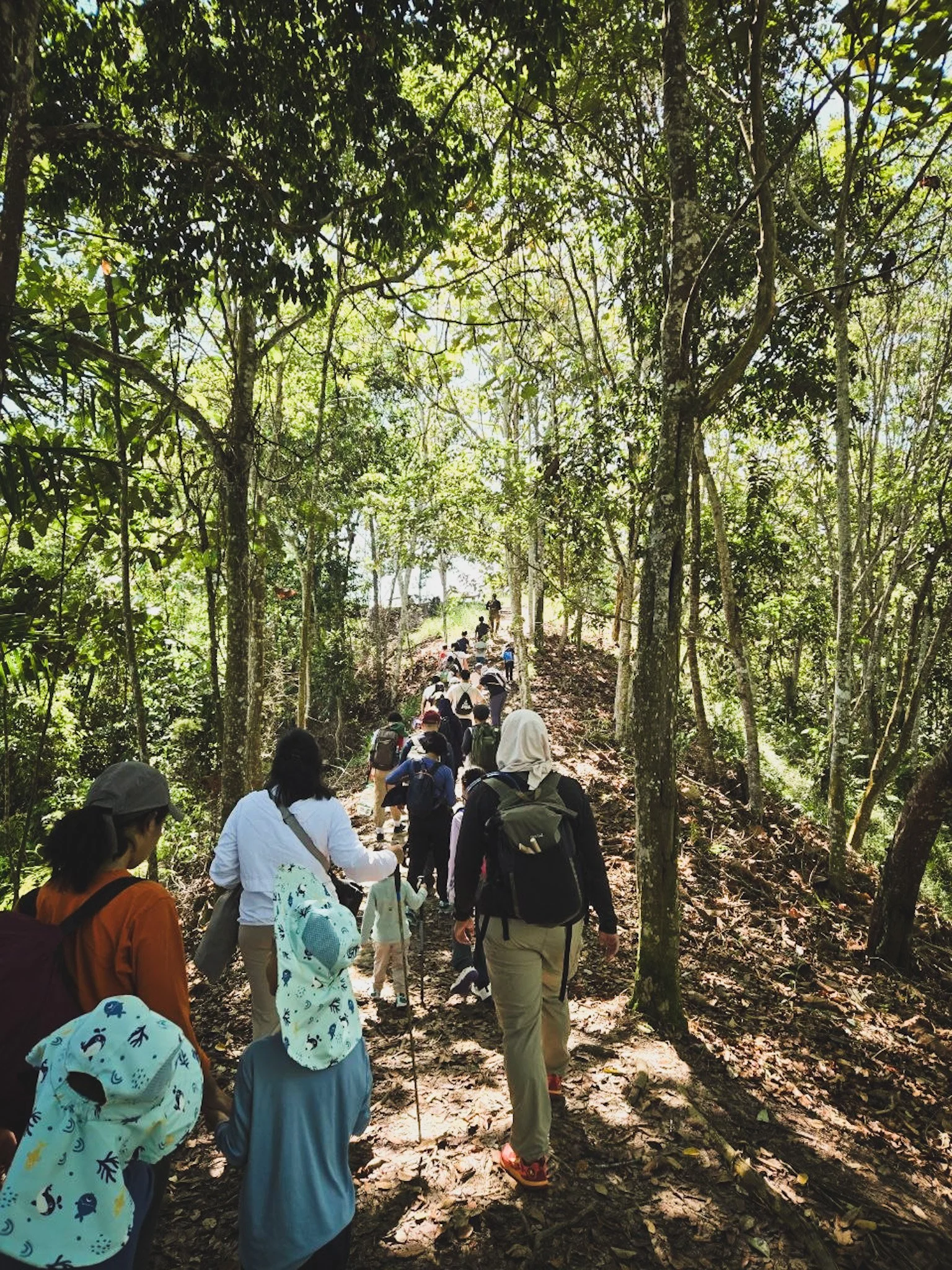
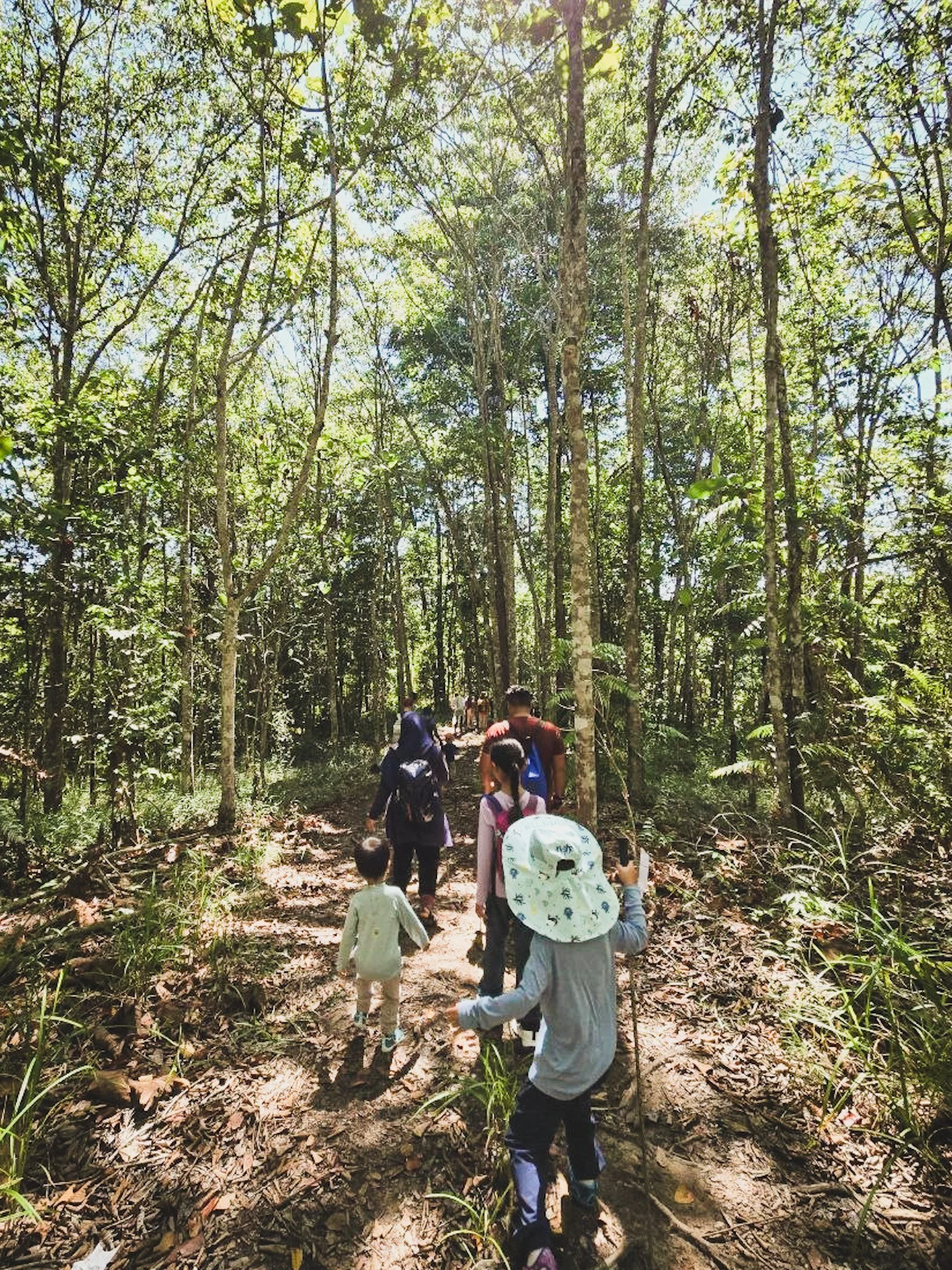
The hike in was pleasant, trees engulfed us and the morning sun peeked through the foliage. The children were in good spirits, with the older children up ahead leading the group. We went uphill and then downhill. The hiking sticks we all borrowed from the base of the hill came in useful.
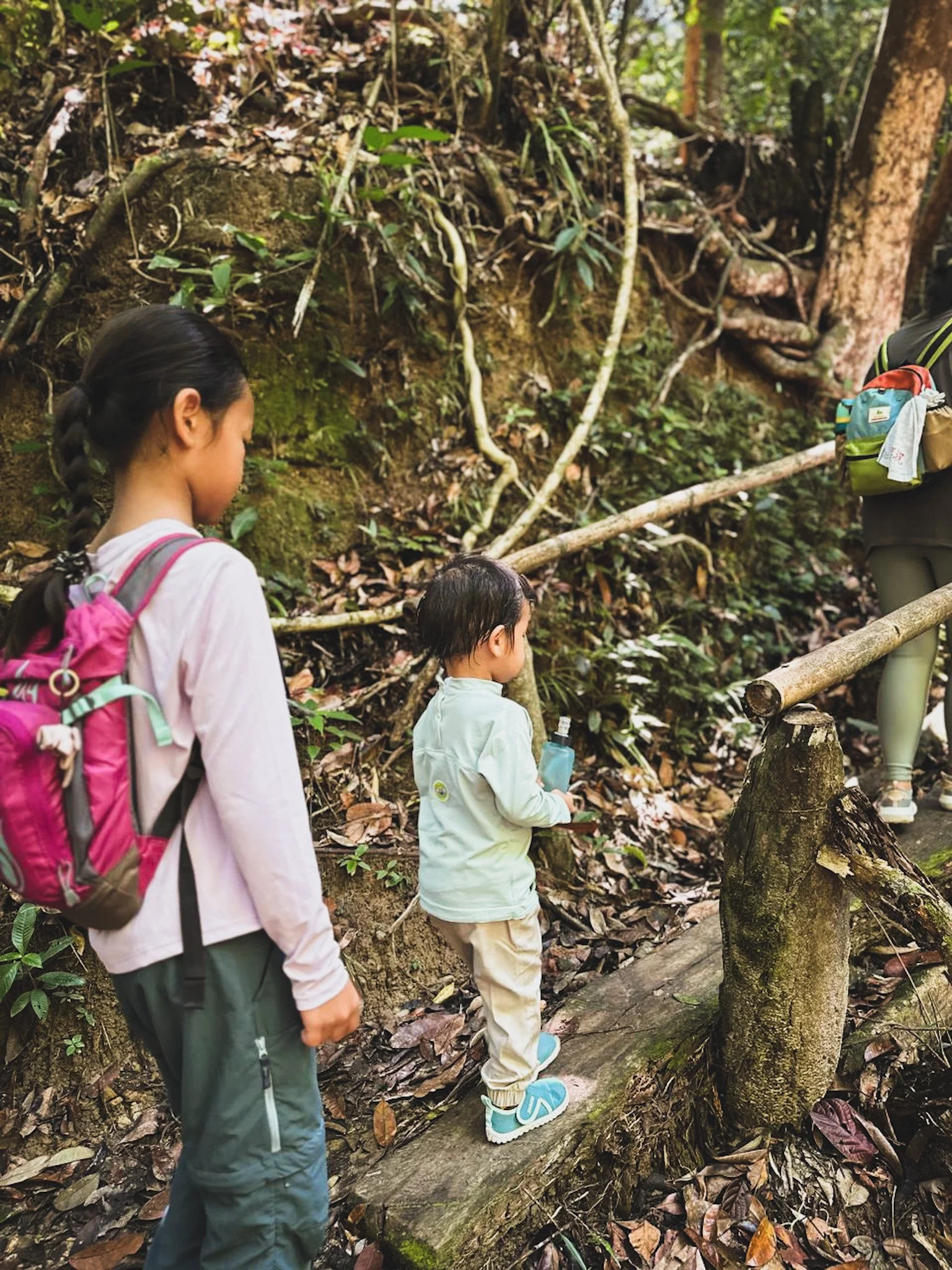
The terrain itself was unlike anything we'd find back in Singapore. It was hilly, with climbs that felt almost vertical in places and downward slopes that dropped at nearly 45 degrees. It was also a lengthy trail, and it threw up surprises along the way. There were sections where the route uphill demanded some real climbing before the path evened out again. Despite this, the children moved with agility. This meant that they'd built up physical strength and coordination during their time in Forest School. Their brains had developed neural pathways needed to move through the terrain safely and efficiently. The adults found themselves a little more breathless than expected, but the children just kept going. There was no doubt that Brunei's terrain was a workout, and it was a clear reminder of why time in the forest matters. The by-product of that time builds children's strength, stamina, and resilience.
The children adapted to the terrain easily. Their agile bodies walked over every log expertly. Their parents trudged ahead and watched their bodies walk through the trail. Along the way, the children found strength in each other's presence.
There were children that had formed a connection and sought each other for safety and belonging. Engaging like the older sibling, and the younger little ones would reach out for the ‘older sibling’s’ hands while moving through the forest. There were moments the older children led the way for the younger ones and they followed confidently behind, fully trusting the lead. There were plenty of times, the children walked hand in hand through the trail together. The adults watched and quietly supported each other’s children like a village.
We continued through the forest, up steps and down slopes, crossing logs that stretched over small trenches. Some had support hand rails while some didn’t. Families blended together in the forest, moving and became one unit. As we moved deeper in, it became clear the handrails had run out entirely. With mental tenacity, everyone offered support to each other. Open, helping hands and words of encouragement were exchanged easily. Both parents and children held steady. In this case, the phrase “I think I can” carried everyone through the forest. As adults, we watched the children move through this with awe.
At one point, it seemed even Andy couldn't quite locate the shortcut to the waterfall. We walked on, and the trail seemed to stretch out endlessly with no destination in sight. We came to a rest stop and paused, the older children broke out in songs and added lightness to the uncertainty.
After a slight detour and a quick check of the map, we turned around and walked downhill. We eventually heard, the trickling of water! We had found our waterfall.
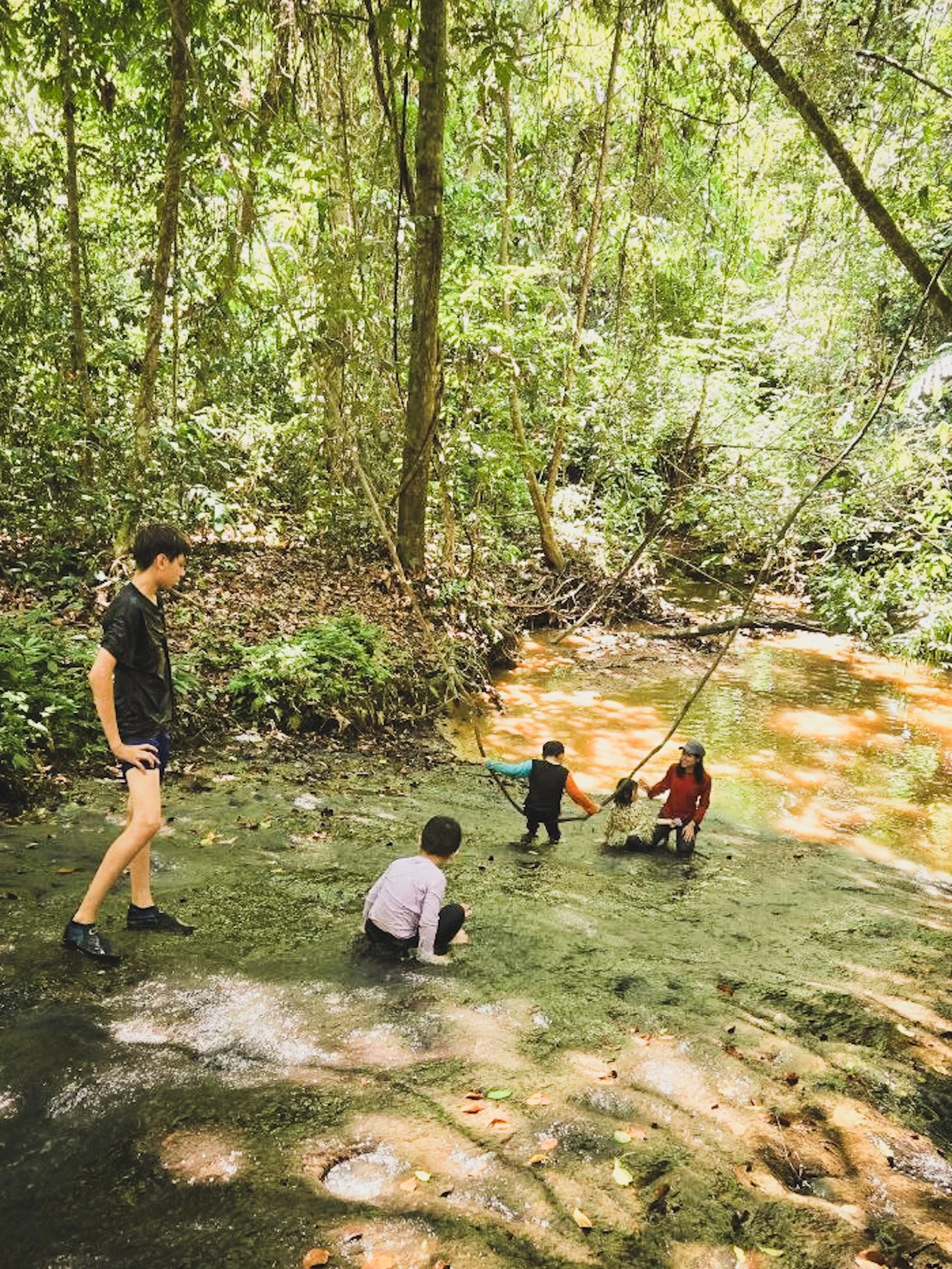
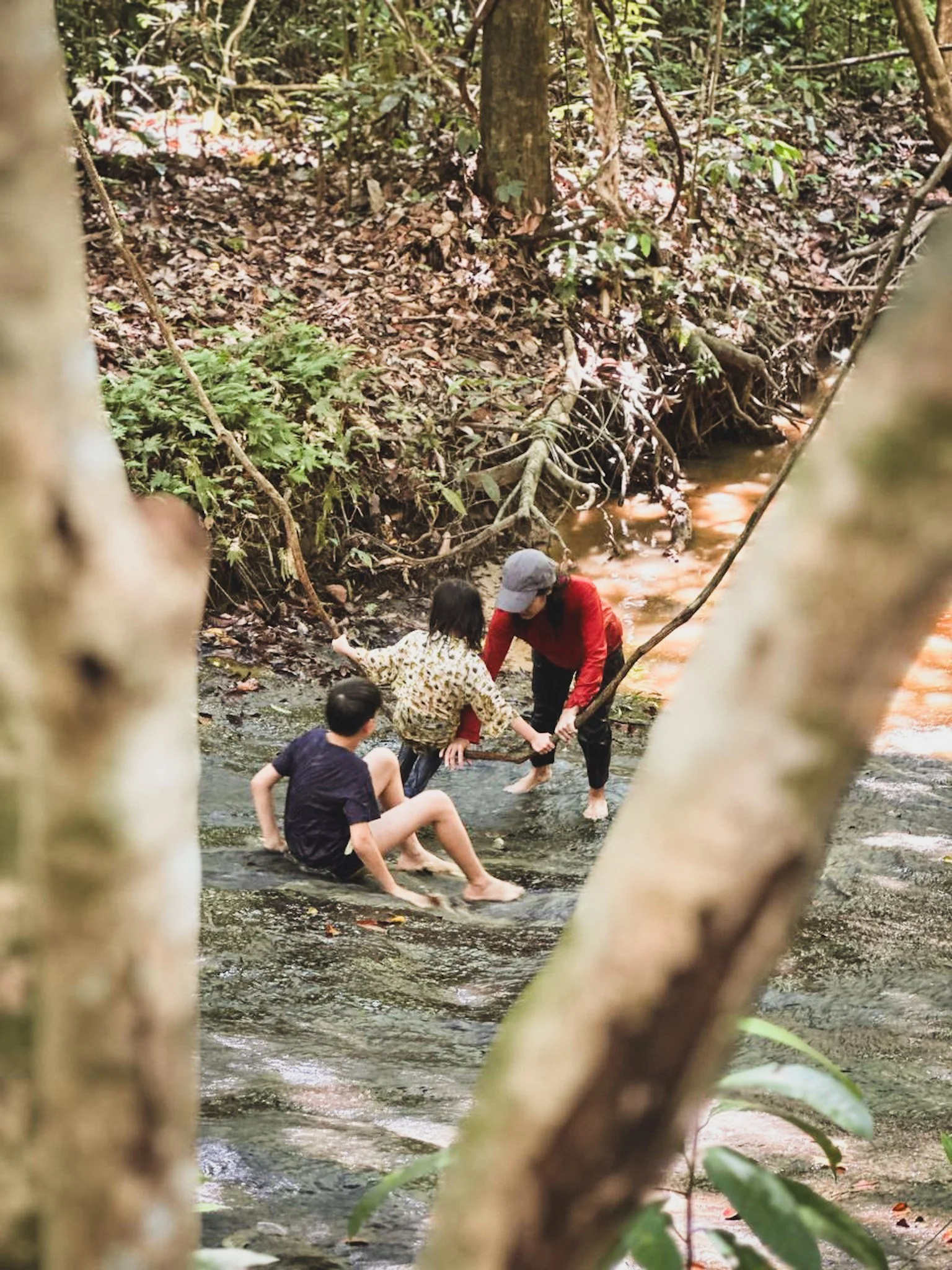
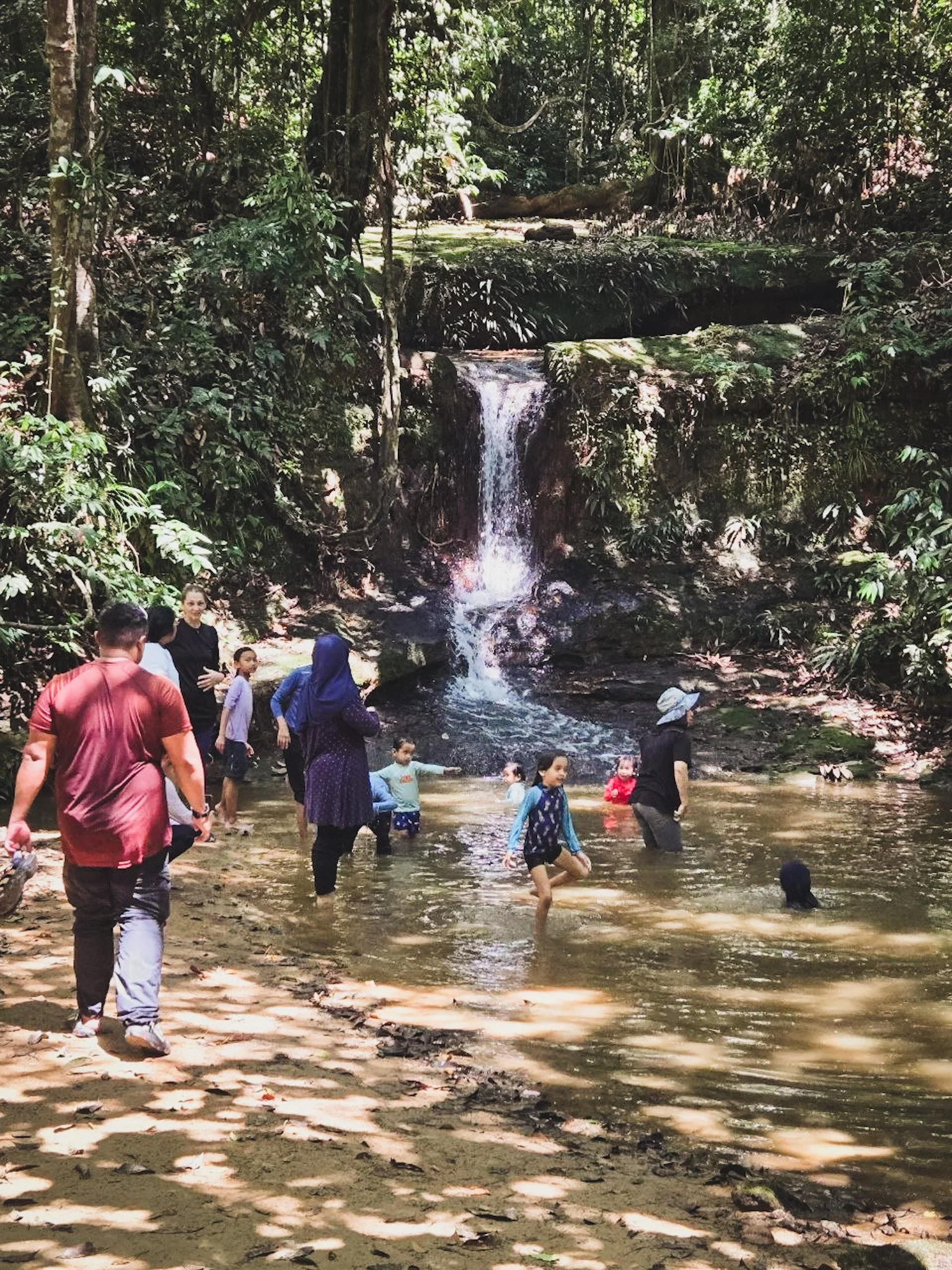
The sound of gushing water lifted the spirits of the children and they couldn’t wait to get in. How magnificent. It was a beautiful sight. The cool waters cooled the heat from their skins and gleeful shrieks were heard. It was the perfect way to cool down after a the hike.
Alas, it was time to head back and grab a quick lunch before heading to Sumbiling Eco Village.
Days 3 & 4
After the hike at Dadap Hills, we were to stay at Sumbiling Eco Village. It was located about an hour away from the city centre and was tucked along Brunei's river. The accommodation was simple, wood cabins with mattresses on the floor and fully equipped shared toilets. The gathering house was the spot to be for meals and everyone 'gathered' together for shared meals.
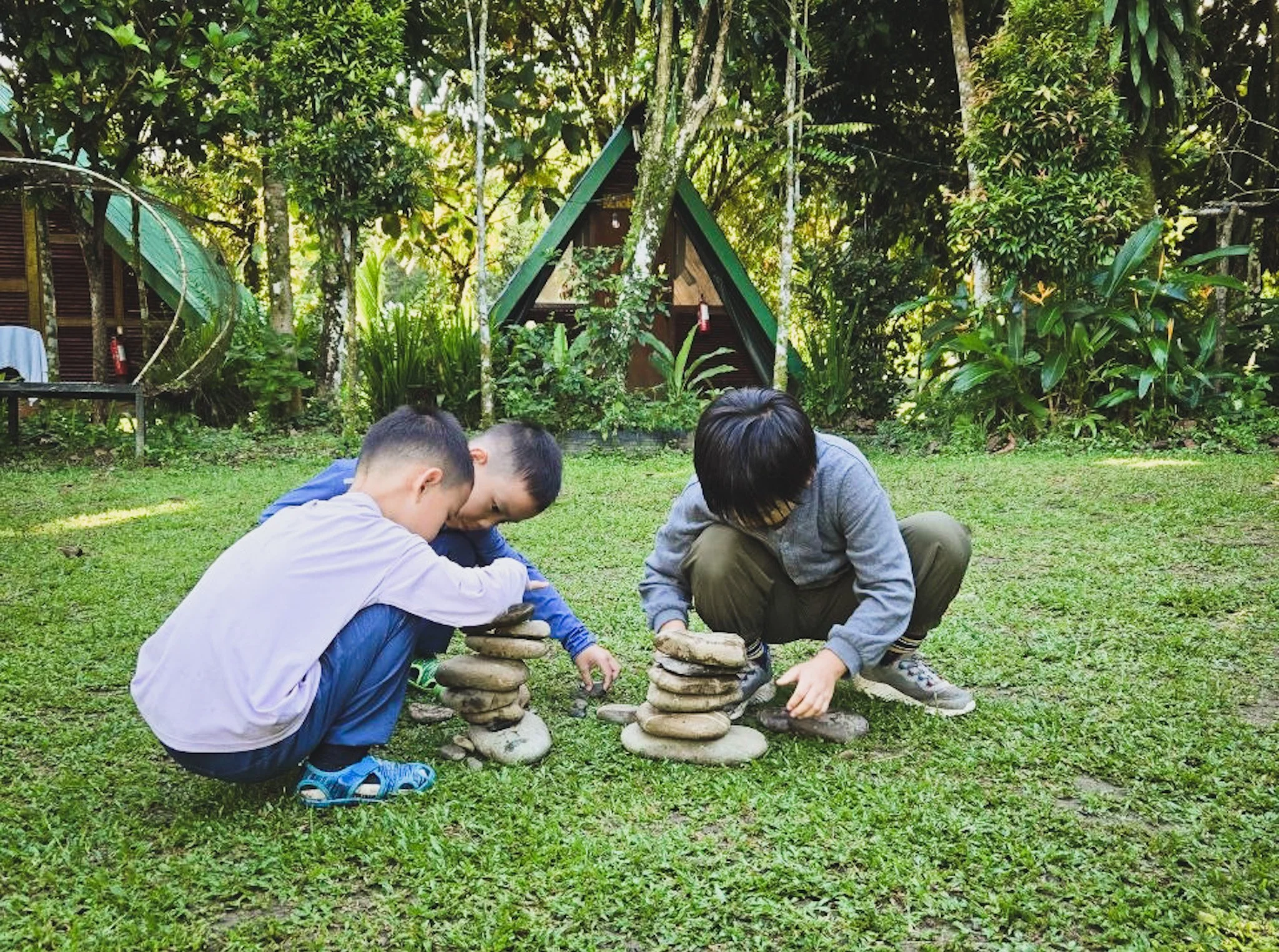
There was no itinerary forcing the children's attention. The owner had organised a few activities like blow darts and rock painting. Some children dipped in and out of these as they liked. But of course in true child-led play, they gravitated on their own. They asked the owners for a ball for a game of soccer; they asked for ropes and took turns to jump rope, they took their time at the swings and stacked rocks and they asked to whittle and saw too. These were the games with the most players and the ones they keep coming back to.
No adult stepped in to direct how the games should go. The older ones adjusted for younger ones. Their games evolved organically, the way they're supposed to when we trust children to lead.
By the time we reached Sumbiling, the camaraderie was tighter, and families weren't individual units anymore. The experience from the hike in Dadap blended all family units. Crossing those bamboo bridges together, holding space for each other's fear and courage, had brought belonging.
What struck out the most is, Forest School isn't confined to "sessions." It's not something that switches on when we enter the forest and off when we leave. For these families, it's embedded into how they live. It's also in how they play, how they problem-solve and how they relate to each other, even on a "relaxed" holiday. It's built over months and years of consistent, unhurried time in nature.
Some observations we had:
• Trusting that connection with nature is essential to children’s spiritual growth
• Being in nature helps the body heal
• Navigating conflicts help children build listening skills, empathy, compassion and being able to see other people’s point of view
• Having big feelings is not a bad thing. All feelings are valid and adults role is to help children feel their feelings in a supportive environment.
• Freedom of movement is a very important part of children’s growth. Physical development has a direct impact on a child’s emotional state
• Regular time outdoors build physical strength and emotional resilience
Till the next call where we gather and wander together.
Written by: Sabrina
Edited by: Aminah